How to Spot and Identify Sewer Fly Larvae Before They Take Over

Updated: Sep 28
Sewer Fly Larvae: What They Are and Why You're Seeing Them

Sewer fly larvae are the worm-like, legless offspring of drain flies (family Psychodidae) — small, fuzzy, moth-like insects that breed inside the organic slime coating your pipes and drains.
If you've spotted tiny pale wrigglers near a drain, here's what you need to know at a glance:
Feature | Detail |
Size | 4 to 10 mm long |
Appearance | Translucent/pale, legless, dark stripe on back |
Where found | Shower drains, sink P-traps, toilet bowls, stagnant pipes |
What they eat | Organic biofilm — bacteria, hair, fungi, decaying waste |
Harmful? | Don't bite, but can trigger asthma and indicate plumbing problems |
How to remove | Physically scrub and clear the organic sludge from drains |
Finding them means one thing: there's a buildup of decomposing organic matter somewhere in your plumbing. It's not just a pest problem — it's a plumbing hygiene problem.
The good news is that once you remove their food source, they have nowhere left to breed.
I'm Adam Wettach, owner of All Star Service & Repair, and over years of diagnosing drain and sewer issues across Utah, I've seen how often a persistent sewer fly larvae problem traces back to a deeper plumbing issue homeowners didn't know they had.
In this guide, I'll walk you through exactly how to spot, identify, and deal with them.
What Are Sewer Fly Larvae and How Do You Identify Them?
To understand how to defeat these persistent pests, we have to look beneath the surface. Sewer flies belong to the official insect family Psychodidae, which includes over 2,600 species worldwide.
While the adults look like tiny, fuzzy moths that are terrible at flying, their offspring are entirely aquatic or semi-aquatic survivalists.
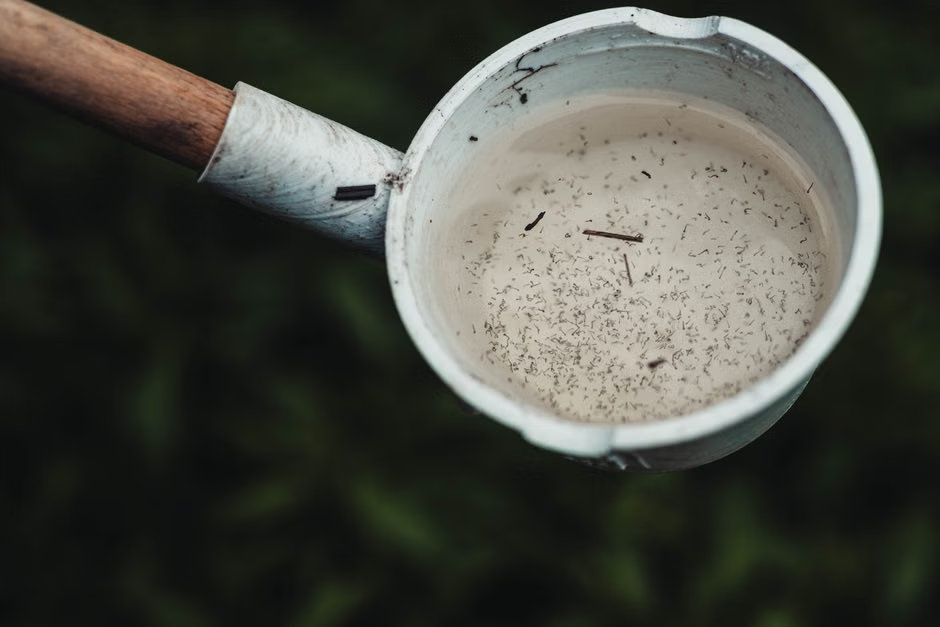
These larvae do not hatch in clean water. Instead, they thrive inside the gelatinous biofilm—that dark, slippery, organic slime layer that clings to the inside of sewer lines, sink traps, and shower drains.
This slime consists of decomposing hair, soap scum, skin cells, and microbial growth.
Because they live submerged in this dense, oxygen-poor environment, they have developed highly specialized biological survival mechanisms. Instead of breathing underwater like a fish, they have a specialized breathing siphon (a posterior spiracle) located on their tail end.
To breathe, they must regularly poke this tiny dark tube above the surface of the water or biofilm to draw in atmospheric oxygen. It is essentially a built-in snorkel that allows them to live deep within your plumbing traps without drowning.
Physical Characteristics of Sewer Fly Larvae
If you are inspecting your drains in Utah and suspect you have found these pests, look closely for these specific physical traits:
Size
When fully mature, they measure between 4 and 10 mm in length (about 1/8 to 3/8 of an inch). They are roughly as thick as a pencil lead.
Body Structure
They have a slender, cylindrical, legless, and eyeless body. Their bodies are divided into 11 distinct segments.
Color
They are typically translucent, cream-colored, whitish, or pale brown.
Distinct Markings
You will notice a dark dorsal stripe running along their back, and their non-retractable head is noticeably darker than the rest of their body.
Posterior Spiracle
Look at their rear end. You will see a small, dark, nipple-like breathing tube or siphon.
Ventral Attachment Disks
On their bellies, they possess specialized suction-like disks. This allows them to anchor themselves firmly to the slippery walls of your pipes, preventing them from being easily washed away when you run the tap.
How to Differentiate Sewer Fly Larvae from Other Household Pests
Homeowners in Northern Utah frequently mistake sewer fly larvae for other common pests. Because different insects require entirely different eradication strategies, making a correct identification is critical.
If you treat a sewer fly issue as if it were a fruit fly or fungus gnat problem, you will waste valuable time and money while the infestation continues to grow. Let's look at how they compare:
Pest Larvae | Typical Size | Primary Breeding Habitat | Key Physical Differences |
Sewer Fly Larvae | 4 to 10 mm | Inside thick, gelatinous plumbing biofilm and sewer pipes | Translucent cream body, dark dorsal stripe, distinct rear breathing siphon, no legs. |
Fruit Fly Larvae | 2 to 5 mm | Rotting fruits, vegetables, and garbage cans | Tapered white bodies, lacking a dark dorsal stripe or a prominent posterior snorkel tube. |
Fungus Gnat Larvae | 3 to 6 mm | Overwatered indoor houseplant soil | Translucent white body with a highly visible, shiny black head capsule; no tail siphons. |
Phorid Fly Larvae | 3 to 10 mm | Decomposing organic matter, wet soil from under-slab sewer leaks | Off-white, plump, and cylindrical, lacking the suction disks and distinct dark dorsal stripe of sewer flies. |
If you spot tiny worms wriggling along the grout lines of your damp shower stall or submerged in toilet water, you are almost certainly looking at sewer fly larvae, not fruit flies or gnats.
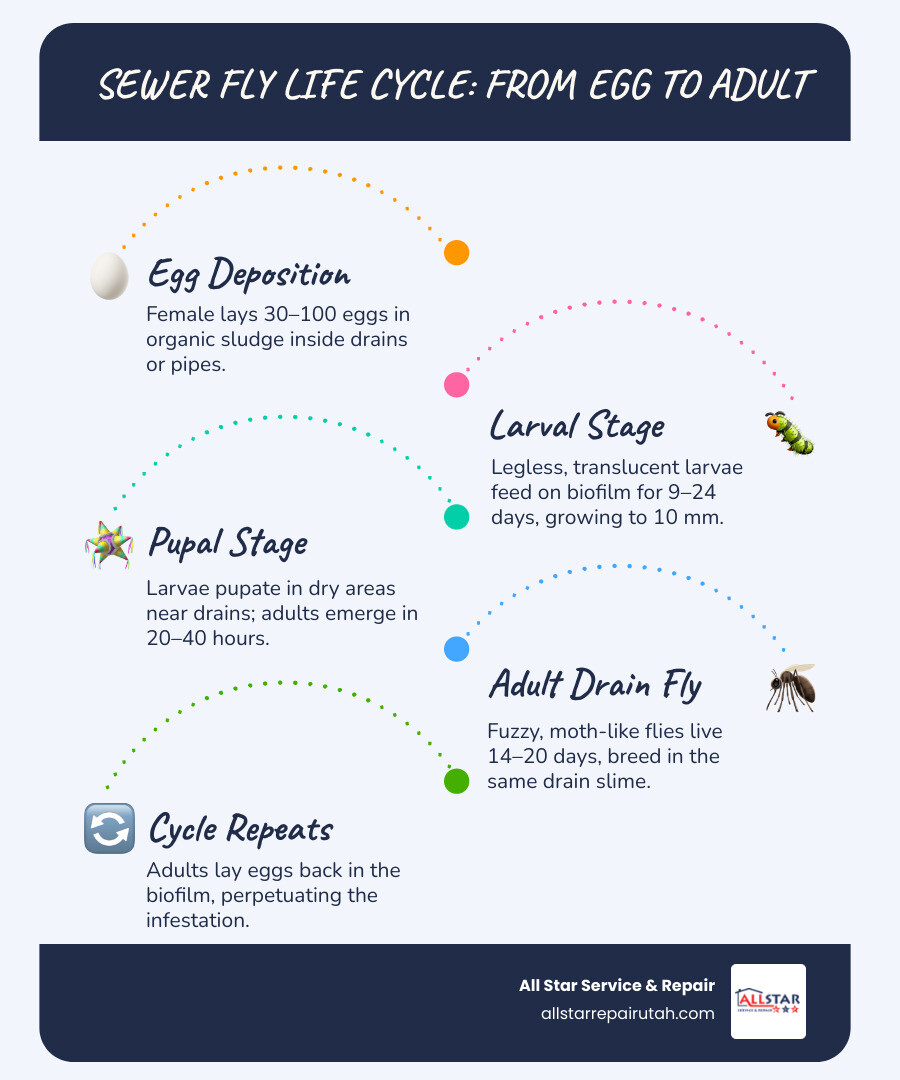
The Life Cycle and Breeding Habits of Sewer Flies
The rapid reproduction cycle of the sewer fly is why a couple of stray flies on your bathroom mirror can quickly escalate into a massive infestation.
Under warm conditions—such as a cozy Utah home in the winter or a humid bathroom in the summer—the entire life cycle from egg to reproducing adult can be completed in as little as 7 to 28 days, though the average is about 14 days.
You can find more details about their development in the guide on Moth Flies (Drain Flies): Identification, Life Cycle & Control.
The cycle begins when a single adult female sewer fly deposits a batch of 30 to 100 eggs. She places these eggs in gelatinous clusters just above the water line inside a moist, organic-rich drain.
Egg Stage
The eggs are incredibly small and incubate for less than 48 hours (usually 30 to 48 hours) before hatching into hungry larvae.
Larval Stage
This is the longest phase of their life, lasting anywhere from 9 to 24 days. During this time, the larvae molt through four distinct stages (instars), feeding voraciously on the organic slime.
Pupal Stage
Once fully grown, the larva transforms into a pupa. This stage is exceptionally brief, lasting only 20 to 40 hours. The pupae remain attached to the pipe walls, preparing to emerge as winged adults.
Adult Stage
The adult fly emerges from the pupal skin. They are weak fliers, often preferring to walk, hop, or rest quietly on nearby walls. Adult males hatch first and live only a few days, while unmated females can survive up to a week.
On average, adult drain flies live for about 14 to 20 days. During this time, they do not feed, focusing entirely on mating and laying more eggs to start the cycle anew.
Where Sewer Flies Breed in Your Home
Sewer flies are highly opportunistic. Any area in your home where moisture stagnates and organic matter accumulates can become a thriving nursery. The most common indoor breeding grounds include:
P-Traps and Sink Drains
The curved portion of pipe beneath your kitchen or bathroom sink (the P-trap) is designed to hold water to block sewer gases. If a sink is rarely used, the water evaporates or stagnates, allowing hair, soap scum, and organic biofilm to accumulate.
Shower and Bathtub Drains
These drains are prime real estate for sewer flies. They collect hair, body oils, and skin cells, creating a dense, gelatinous buffet for sewer fly larvae.
Toilet Bowls
In guest bathrooms or basement bathrooms that are rarely flushed, the standing toilet water can accumulate organic debris, attracting breeding females.
Crawlspaces and Under-Slab Soil
If you have a hidden plumbing leak beneath your concrete foundation or in a crawlspace, raw sewage can saturate the surrounding soil.
This creates a massive, hard-to-reach breeding ground. To prevent these cold-weather plumbing issues, check out our guide on Sewer and Drain Maintenance to Avoid Plumbing Issues.
What Causes an Infestation and Are They Harmful?
A sewer fly infestation is rarely just a "bug problem." In almost every case, the flies are a biological indicator of a physical plumbing failure. The primary causes of an infestation include:
Clogged Pipes and Slow Drains
When hair, grease, and soap scum accumulate, they slow down water flow. This allows a thick, gelatinous biofilm to build up along the pipe walls, providing the perfect habitat for larvae.
Infrequently Used Fixtures
Guest bathrooms, basement wet bars, and floor drains that sit unused for weeks allow the water seal in P-traps to dry out or stagnate.
Broken Sewer Lines and Slab Leaks
If a sewer pipe cracks or collapses beneath your home's concrete slab foundation, raw sewage will leak into the soil. This saturated, organic-rich dirt becomes an outdoor breeding ground, and the emerging flies will find their way up through cracks in your flooring.
If you suspect a hidden leak is fueling your pest problem, we highly recommend scheduling our Professional Sewer Inspection Services to locate the source of the issue.
Health Risks Associated with Sewer Flies
The common bathroom drain fly (Clogmia albipunctata) does not bite, sting, or feed on human blood. Because of this, many people assume they are completely harmless. However, their presence does carry several notable health and sanitary risks:
Mechanical Transmission of Pathogens
Because these flies breed in raw sewage, septic tanks, and decomposing organic waste, their bodies are covered in microscopic hairs that easily trap bacteria.
When they crawl out of your drains and land on your kitchen counters, food preparation surfaces, or toothbrushes, they can mechanically transfer food-borne pathogens like E. coli and Salmonella.
Bronchial Asthma
As adult sewer flies die, their bodies dry out and disintegrate into a fine, powdery dust. Inhalation of these dried, airborne insect fragments can trigger severe allergic reactions and bronchial asthma attacks in sensitive individuals.
Myiasis
While extremely rare, some species of drain fly larvae can cause an opportunistic medical condition called myiasis.
This occurs when the larvae accidentally enter the human body (usually through open wounds, poor hygiene, or contaminated water) and live temporarily as parasites inside human tissue.
How to Eliminate and Prevent Sewer Fly Larvae
If you have a sewer fly problem, your first instinct might be to grab a can of bug spray or pour chemical pesticides down the drain. This is a mistake.
First, there are no chemical insecticides legally registered or approved for use inside residential drains or sewer systems. Second, targeting adult flies is completely ineffective.
Even if you kill every winged adult in your bathroom, a new generation of hundreds of flies will hatch from the larval biofilm within a matter of days.
To permanently eradicate sewer fly larvae, you must physically destroy their breeding ground—the organic biofilm. To learn more about keeping your pipes clean and healthy, read about The Importance of Regular Drain Cleaning for Your Home's Plumbing Health.
Here is the step-by-step mechanical cleaning process to eliminate them:
Scrub the Pipes
Remove the metal drain stopper or grate. Use a stiff, long-handled pipe brush (or a specialized drain brush) to physically scrub the inside of the pipe walls. This mechanical action breaks up the tough, gelatinous biofilm where the larvae and eggs reside.
Flush with Boiling Water
Once you have loosened the slime, carefully pour a kettle of boiling water down the drain. This helps wash away the remaining organic debris and kills surface-level larvae on contact.
Apply Enzymatic Cleaners
Use an over-the-counter, pipe-safe enzymatic drain cleaner. These bio-enzymatic formulas contain natural bacteria that digest organic matter, hair, and grease over several hours, completely stripping away the larval food source.
Avoid harsh chemical drain openers, which can damage your pipes and destroy the beneficial microbes in your septic system.
Detecting Active Breeding Sites
If you have multiple drains in your home, you need to pinpoint exactly which ones are hosting the larvae. You can easily do this using two simple DIY monitoring methods:
The Tape Test
Take a strip of clear adhesive tape and place it sticky-side-down over the drain opening, leaving some space for air to flow. Leave it overnight. If flies are breeding in that pipe, they will attempt to emerge and become trapped on the sticky underside of the tape.
The Petroleum Jelly Cup Test
Take a clear plastic cup or glass and coat the inside with a thin layer of vegetable oil or petroleum jelly. Invert the cup directly over the drain opening overnight. Any emerging flies will fly up, get stuck to the oily walls of the cup, and be easily identified the next morning.
Professional Solutions for Severe Infestations
Sometimes, DIY scrubbing and hot water are not enough. If the biofilm has accumulated deep within your main sewer line, or if you are dealing with a broken pipe under your concrete slab, you need professional intervention.
At AllStar Service & Repair, we provide advanced solutions to completely clear out stubborn sewer fly breeding grounds:
Hydro-Jetting
This is the most reliable plumbing service to completely eliminate biofilm. Using specialized equipment, we blast high-pressure water (up to 4,000 PSI) through your entire drainage system.
This thoroughly scours the pipe walls, washing away years of grease, hair, and organic sludge along the entire length of your plumbing. You can learn more about this process on our Main Sewer Cleaning and Hydro Jetting Services page.
Sewer Line Repair
If our camera inspection reveals that the flies are breeding in soil saturated by a cracked sewer line beneath your home, we can perform targeted pipe repairs to stop the leak and eliminate the breeding ground for good.
If you are ready to put an end to these persistent pests, you can Get Sewer Cleaning Services to Prevent Sewer Troubles today.
Frequently Asked Questions about Sewer Flies
Can you drown sewer fly larvae?
No, you cannot drown sewer fly larvae under normal household conditions. Because they are highly adapted aquatic survivalists, they can survive submerged underwater for 24 hours or more.
They do this by using their water-repellent body hairs to trap a pocket of atmospheric air around their bodies, allowing them to breathe even when completely submerged inside a flooded P-trap.
Running water down the sink might wash away a few loose larvae, but those anchored to the pipe walls with their ventral suction disks will survive without a problem.
Why does pouring bleach down the drain fail to kill them?
Pouring chlorine bleach down the drain is one of the most common DIY mistakes homeowners make. While bleach is a powerful disinfectant, it cannot penetrate the thick, rubbery, gelatinous organic biofilm where the larvae and eggs are buried.
The bleach will simply slide over the surface of the slime, killing a few surface microbes but leaving the larvae completely unharmed underneath.
Furthermore, pouring large amounts of bleach down your drains can corrode older metal pipes, release toxic fumes, and severely damage the delicate bacterial balance required for septic systems to function properly.
Are sewer fly larvae beneficial in any way?
Surprisingly, yes! In very small numbers and in the right environments, sewer fly larvae are actually considered beneficial organisms.
Equipped with incredibly strong chewing jaws, they feed on dense layers of organic sludge, hair clogs, and soap scum that would otherwise restrict water flow.
In fact, they play a critical ecological role in municipal wastewater treatment plants, particularly in trickling filter systems.
In these facilities, millions of larvae form a biological community with bacteria and algae to consume organic pollutants and purify wastewater before it is returned to the environment.
However, when they migrate into your residential bathroom, their role as helpful plumbers quickly turns into an unsanitary household nuisance.
Conclusion
Sewer fly larvae are more than just an annoying pest—they are a clear signal from your plumbing system that it is time for a thorough cleaning.
Whether the issue is a simple buildup of hair and soap scum in your shower drain or a hidden sewer line break beneath your home, ignoring the problem will only allow the infestation to grow.
At AllStar Service & Repair, we believe in solving plumbing issues with integrity, transparency, and straightforward pricing.
Serving Provo, UT, and Northern Utah counties, our team is equipped with the latest diagnostic tools, camera inspections, and hydro-jetting technology to clear out stubborn clogs and keep your home pest-free.


Comments