How to Eliminate Drain Flies Permanently in 5 Simple Steps

Updated: 3 days ago
When You Need a Plumber for Drain Flies

A plumber for drain flies can help when small, fuzzy, moth-like flies keep appearing near a sink, shower, floor drain, or toilet despite regular cleaning. These insects breed in the moist organic film inside drains and pipes, not on the visible surface of the fixture.
Quick answer: Drain flies usually stop only after the slimy buildup where they lay eggs is removed. A plumber is the right call when flies return after thorough cleaning, a drain runs slowly, or you suspect a dry trap, leaking seal, or damaged drain line.
Drain flies are tiny, gray or tan insects in the Psychodidae family. They are weak fliers and often rest on bathroom walls near their breeding source. Eggs can hatch within 32 to 48 hours, so killing the adults without removing the pipe biofilm does not solve the problem.
I am Adam Wettach, owner of All Star Service & Repair. My hands-on work as a plumber for drain flies includes finding the drain, trap, clog, or hidden repair issue that keeps providing a place for them to breed.

Understanding Drain Flies and Common Plumbing Causes

Drain flies (also known as moth flies, sewer flies, or sink flies) are small insects measuring between 1.5 to 5 mm in length. They are light gray or tan with hair-covered wings that fold over their bodies like tiny fuzzy roofs.
Because they are weak, erratic fliers, they typically move only a few feet at a time and spend most of their lives resting on nearby tiles or walls close to household plumbing fixtures.
While adult drain flies only live for 1 to 3 weeks (typically around 20 days), their rapid reproduction rate makes an infestation feel endless.
Female drain flies lay egg clusters containing anywhere from 30 to 100 eggs directly inside the nutrient-rich, gelatinous organic biofilm that lines dark, damp plumbing pipes. These eggs hatch in a rapid 32 to 48 hours.
The resulting larvae grow between 4 to 10 mm long, appearing as slender, legless worms.
Uniquely adapted to plumbing environments, these larvae feature a dark breathing tube on one end that extends upward through the thick slime to draw air while they feed on decaying organic matter, hair, soap scum, and grease.
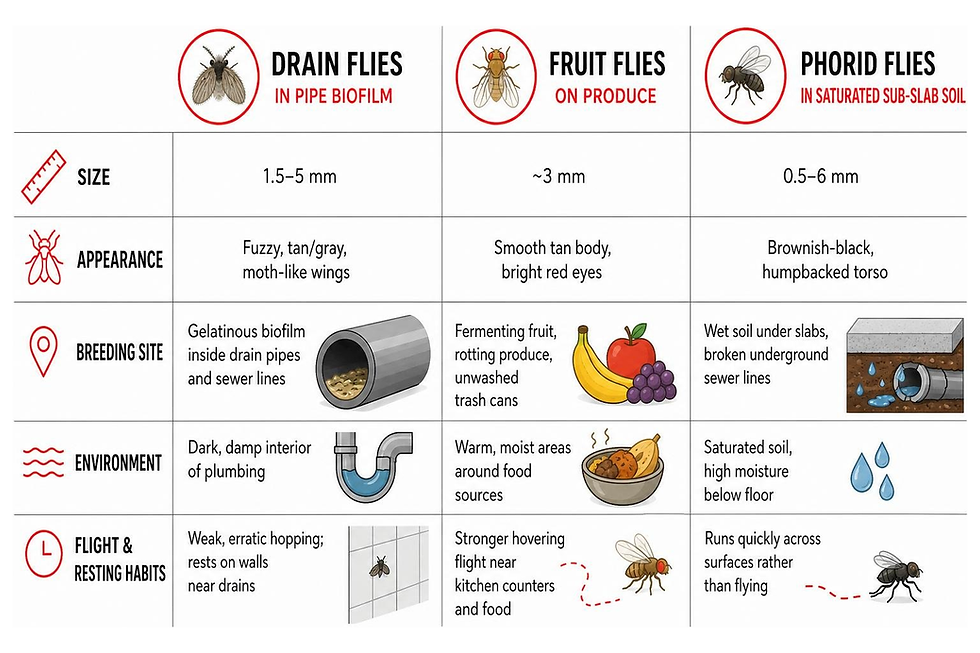
To effectively eradicate these pests, it is vital to distinguish drain flies from other common household flies. The table below highlights key differences:
Pest Type | Physical Appearance | Common Breeding Sites | Flight & Resting Habits |
Drain Fly | 1.5–5 mm, fuzzy, tan/gray, moth-like appearance | Gelatinous biofilm inside drain pipes and sewer lines | Weak, erratic hopping; rests on walls near drains |
Fruit Fly | 3 mm, smooth tan body, prominent bright red eyes | Fermenting fruit, rotting produce, unwashed trash cans | Stronger hovering flight near kitchen counters and food |
Phorid Fly | 0.5–6 mm, brownish-black, distinct humpbacked torso | Wet soil under slabs, broken underground sewer lines | Runs quickly across surfaces rather than flying |
According to the Virginia Tech Entomology Guide, pouring standard household bleach down the drain is not recommended. Bleach simply slides right over the top of dense biofilm without destroying the larvae feeding beneath it.
Learning how Sewer Fly Larvae thrive inside plumbing lines helps explain why surface washing fails to solve the root problem.
Why Drain Flies Keep Returning After Cleaning
If you have scrubbed your bathroom sink until it sparkles and sprayed bug spray at every visible insect, you might wonder why new flies emerge just days later. The answer lies deep inside your plumbing lines.
Drain fly larvae possess surprisingly strong jaws capable of chewing through dense layers of grease and slime inside pipes.
Furthermore, these larvae can survive dramatic temperature fluctuations, low oxygen levels, and can even trap air bubbles to survive completely submerged under standing water for up to 24 hours.
When standard liquid cleaning products are poured down a sink, they flow quickly through the center of the pipe and drain straight out to the sewer line. The thick, gelatinous organic film lining the pipe walls remains virtually untouched.
Because one generation of drain flies can complete its development from egg to adult in just 1 to 3 weeks under favorable conditions, leaving even a small patch of breeding biofilm intact allows hundreds of new flies to hatch continuously.
When deep pipe sludge accumulates far down the drain line or behind clog points, everyday sink cleaning is unable to reach the true breeding ground.
5 Steps to Eliminate Drain Flies from Your Home Drains

Removing drain flies permanently requires targeting the underlying breeding site rather than chasing adult flies around the room. Follow these 5 practical steps to systematically clean your plumbing and eliminate breeding habitat.

Step 1: Perform the Overnight Tape Test
Before spending time cleaning every fixture in your home, pinpoint exactly which drain is harboring the insects.
Take strips of clear packaging tape and place them sticky-side down across your sink, shower, or floor drain openings before going to bed.
Ensure you leave small gaps around the edges so air can flow, which encourages flies to move upward.
Leave the tape undisturbed overnight.
In the morning, inspect the underside of the tape. If adult drain flies emerged overnight, they will be stuck to the adhesive surface. Alternatively, invert a clear plastic cup lightly coated on the inside with petroleum jelly or vegetable oil over suspected drains overnight.
This simple diagnostic step prevents wasted effort by identifying the exact pipes producing the insects.
Step 2: Mechanically Clean the Biofilm and P-Trap
Because chemical liquids run past pipe slime, physical removal is the most reliable way to strip away organic film.
Scrub the Drain Inlet: Use a long, stiff pipe brush or a flexible plastic drain cleaning zip-tool. Insert the brush deep into the drain pipe, twisting and scrubbing aggressively against the interior walls to dislodge trapped hair, soap scum, and sludge buildup.
Clean Bathrooms and Showers: Feed plumber's snakes or brushes through the bathtub overflow plate rather than just the drain opening to access deep hair clogs where larvae frequently hide.
Remove and Disassemble the P-Trap: Place a bucket underneath the U-shaped pipe (P-trap) beneath your sink. Loosen the slip nuts, detach the trap, and thoroughly scrub out the internal bend using hot water and a wire brush.
If your sinks continuously drain slowly or overflow during cleaning, review the Top Signs Your Drains Need Professional Drain Cleaning Services to determine if deeper mechanical line clearing is necessary.
Step 3: Apply Bio-Enzyme Drain Cleaners
Once you have mechanically removed heavy surface buildup, residual biofilm clinging to pipe walls must be digested.
Unlike harsh caustic chemical openers that can damage home plumbing and fail to penetrate slime, bio-enzymatic drain cleaners utilize live, natural bacteria and specialized enzymes.
These biological agents cling to pipe walls, continuously digesting organic waste, fats, oils, and protein buildup down to harmless carbon dioxide and water.
Apply thick enzymatic drain gels or biological foaming products daily for 5 to 7 days, ideally right before bed when fixtures will remain unused overnight. This extended contact time gives enzymes the opportunity to break down stubborn breeding material completely.
Commercial foam products like those evaluated in TERRO Insect Killer Research demonstrate how 360-degree expanding foams help coat internal pipe walls thoroughly.
Step 4: Inspect and Treat Unused Fixtures
Infrequently used guest bathrooms, basement floor drains, utility sinks, and vacation home fixtures are prime locations for drain fly infestations.
Every plumbing fixture relies on a water seal inside its P-trap to block sewer gases and insects from entering living spaces. When a sink or shower sits unused for weeks, standing water inside the P-trap slowly evaporates.
Once this trap seal dries out, organic debris resting inside the pipe hardens into prime breeding ground, while adult flies gain an open path from main sewer lines directly into your home.
Restoring dry traps is straightforward:
Pour 1/2 gallon of hot water down infrequently used drains weekly to replenish the hydraulic trap seal.
Remove floor drain grates and scrub away collected lint, sediment, and organic waste.
Install fine-mesh removable strainers over floor drains to catch organic debris before it enters the pipe system.
Step 5: Implement Preventative Plumbing Maintenance
After eliminating an active fly population, simple routine habits prevent organic material from re-accumulating inside your plumbing:
Perform Weekly Hot Water Flushes: Run hot tap water through every sink and shower drain for at least 30 seconds weekly to wash away fresh organic deposits before biofilm forms.
Dispose of Kitchen Grease Properly: Never pour cooking oil, bacon fat, or animal fats down kitchen sinks. Scrape cool grease directly into trash receptacles to prevent greasy coatings inside drain pipes.
Schedule Professional Maintenance: Keep drain lines free of grease buildup and deep obstruction by utilizing professional Drain Maintenance Services.
When to Call a Plumber for Drain Flies
While basic DIY cleaning solves simple drain fly problems near fixture inlets, persistent or widespread infestations often signal structural plumbing issues deeper within your drain waste vent (DWV) system.
Knowing when to engage a licensed plumber for drain flies saves time and prevents structural building damage.
Key Indicators You Need a Plumber for Drain Flies
It is time to seek professional plumbing expertise if you experience any of the following warning signs:
Infestations Persisting Beyond 2 Weeks: If you have rigorously scrubbed P-traps and applied bio-enzyme cleaners daily for two full weeks without seeing a drop in adult fly populations, breeding is occurring deep within main sewer lines beyond DIY reach.
Recurring Slow Drains and Backups: Multiple slow-draining sinks accompanied by flies indicate heavy, deep-seated organic clogs or main line blockages.
Flies Emerging Around Toilet Bases: If flies hover continuously around the base of a toilet, the wax ring seal connecting the toilet horn to the closet flange may be damaged or compromised, allowing flies and sewer gas to escape into your bathroom.
Cracked Underground or Sub-Slab Drain Lines: Persistent infestations of phorid flies or drain flies emerging from wall voids or basement floor cracks suggest a broken sewer pipe leaking waste into the soil beneath your home.
How a Professional Plumber for Drain Flies Solves Deep Pipe Infestations
At All Star Service & Repair, our approach as a specialized plumber for drain flies goes far beyond basic surface treatments. We utilize advanced plumbing diagnostics and equipment to resolve complex breeding conditions permanently:
High-Definition Video Camera Pipe Inspection
We insert flexible micro-cameras deep into main sewer lines and drain pipes to visually inspect pipe interiors, pinpoint exact crack locations, identify line sags (belly in the pipe), and locate deep organic sludge masses.
Professional Hydro-Jetting
For heavy biofilm accumulation throughout main lines, high-pressure hydro-jetting scours pipe walls with pressurized water, blasting away decades of organic slime, grease, and roots without damaging pipes.
Learn more about our Main Sewer Cleaning & Hydro Jetting capabilities.
Structural Repair and Wax Ring Replacement
We replace deteriorated toilet wax seals, repair broken vent pipes, and fix cracked underground sanitary lines to stop sewer gas leaks and eliminate pest entry points.
Urgent Response Services
When broken drain lines cause sewage backups or severe fly blooms, our team offers rapid Emergency Drain Services to safeguard your home's hygiene.
Frequently Asked Questions About Drain Flies
Does pouring bleach down the drain kill drain flies?
No. Pouring household liquid bleach down drains is largely ineffective against drain fly infestations.
Bleach is a watery liquid that quickly washes down the center of pipe channels without penetrating thick, gelatinous organic biofilm.
While bleach may kill a few adult flies or surface-level larvae on contact, it leaves the bulk of the eggs and feeding larvae protected beneath dense slime intact.
Furthermore, pouring large amounts of bleach down drains can damage septic systems, harm plumbing pipes, and pose severe health risks if accidentally mixed with ammonia or acidic drain openers (releasing dangerous chloramine or chlorine gases).
Mechanical pipe cleaning and bio-enzymatic cleaners are far safer and vastly more effective.
Can a cracked pipe or dry P-trap cause drain flies?
Yes. Structural plumbing defects and dry P-traps are two primary causes of persistent drain fly problems.
When a fixture remains unused for extended periods, the standing water seal in the U-shaped P-trap evaporates. Without this liquid barrier, sewer gas and drain flies breeding in main sewer lines have an open path directly into your home.
Similarly, if an underground main drain pipe or sub-slab sewer line cracks or breaks, organic waste leaks out into surrounding soil.
Drain flies and phorid flies breed heavily in this saturated soil and enter living spaces through slab cracks, wall voids, or flooring gaps. Fixing the structural pipe break is the only way to resolve the infestation.
How long does it take to completely get rid of drain flies?
When proper mechanical scrubbing and bio-enzymatic drain treatments are performed daily, noticeable reductions in fly populations typically occur within 5 to 7 days. However, completely eradicating an infestation usually takes 1 to 3 weeks.
This timeframe aligns with the natural lifespan of adult drain flies (up to 20 days) and their egg-to-adult development cycle (1 to 3 weeks). Once the organic breeding biofilm is completely removed from pipes, female flies have nowhere to lay eggs.
As the remaining adult flies naturally complete their short life cycle and die off, the population vanishes entirely.
Conclusion
Drain fly infestations are frustrating, but they are entirely solvable when addressed at the source. Because these insects depend on gelatinous organic biofilm inside plumbing pipes to feed and lay eggs, chemical sprays and bleach applications never deliver long-term relief.
By mechanically scrubbing pipes, digesting stubborn slime with bio-enzymatic cleaners, and keeping water seals active in all P-traps, you can reclaim your sinks and showers.
When DIY cleaning step-by-step methods fall short, or when persistent flies indicate deep main-line clogs, dry traps, or broken sewer lines, professional intervention is essential.
At All Star Service & Repair, our team brings integrity, straightforward pricing, and specialized diagnostic tools to every service call across Provo and Northern Utah counties.


Comments