Professional Commercial Pressure Regulator Installation for Businesses That Hate Leaks

Updated: Oct 2
Why Commercial Pressure Regulator Installation Gets Expensive When Done Wrong
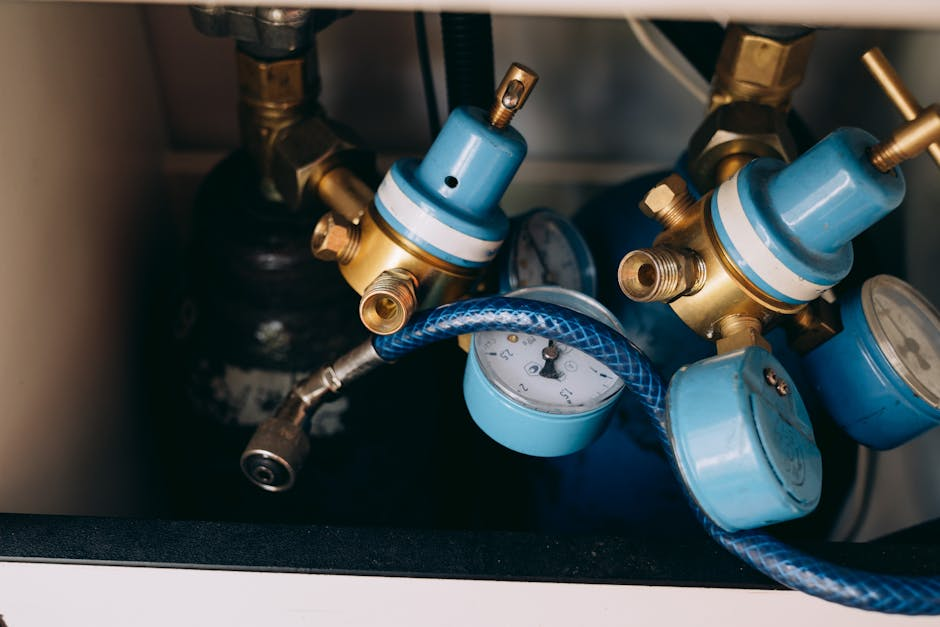
Commercial pressure regulator installation is one of those jobs where the difference between "good enough" and "done right" shows up fast — usually as a leak, a failed inspection, or a downstream appliance running at the wrong pressure.
Here's what you need to know up front:
Commercial regulators control gas or water pressure to safe, usable levels for your building's equipment
Installation must follow NFPA 54/ANSI Z223.1 and ANSI Z21.80/CSA 6.22 standards (as of April 2026)
Systems over 2 PSI require factory-installed overpressure protection devices (OPDs)
A licensed professional should handle all commercial gas regulator work — permits and qualifications are required in Utah
Incorrect installation can result in leaks, equipment damage, code violations, or safety hazards
For most Utah businesses, the fastest and safest path is hiring a qualified technician who knows local codes, has the right tools, and can verify outlet pressure before signing off.
Pressure regulators do one job: they take high incoming pressure and bring it down to a stable, controlled level your equipment can handle safely.
In a commercial setting, that means protecting everything from boilers and unit heaters to commercial kitchen appliances and building water systems.
The stakes are higher than in a residential install. Flow rates are larger. Inlet pressures are higher. Codes are stricter.
And the consequences of a failed regulator — whether it's a gas regulator pushing 60+ psig or a water PRV letting pressure spike past safe limits — can mean thousands of dollars in damage or a forced shutdown.
That's why this guide exists. Whether you're evaluating your current setup or planning a new installation, here's everything you need to know to get it right.

Essential Tools and Safety for Commercial Pressure Regulator Installation
When we walk onto a job site in Provo or anywhere in Northern Utah, safety isn't just a suggestion—it’s the foundation of the job. Working with high-pressure gas or water lines carries inherent risks.
Before we even touch a pipe wrench, we ensure our team is equipped with the right Personal Protective Equipment (PPE), including safety glasses, durable work gloves, and often steel-toed boots to protect against heavy commercial components.
The Professional Toolbag
A successful commercial pressure regulator installation requires more than just a standard adjustable wrench. To do this right, we utilize:
Precision Pipe Wrenches: Sized appropriately for commercial diameters.
Digital Manometers/Pressure Gauges: Crucial for testing and adjusting a regulator to the exact PSI required by the manufacturer.
Soap and Water Solution: For the classic, foolproof leak test.
Torque Wrenches: Many commercial units, like the Itron B-series, have specific torque requirements (often 35-50 ft-lb for union nuts or diaphragm screws) that can't be "guessed" by feel.
Preparation is Everything
One of the most common rookie mistakes is failing to prepare the hardware. We always start by removing all shipping plugs from the inlet, outlet, and vent ports. If these stay in, the system won't just fail; it could potentially over-pressurize and cause a rupture.
Next, we clean the piping thoroughly. Debris is the natural enemy of a regulator's internal seat. A single metal shaving can prevent the regulator from "locking up," leading to pressure creep that damages downstream equipment.
When applying pipe joint sealant, we apply it only to the male threads of the pipe. Never put sealant on the female threads of the regulator itself, as excess goop can migrate into the internal valve and cause a failure.

Gas vs. Water: Key Differences in Commercial Pressure Regulator Installation
While both devices "regulate," a natural gas regulator and a water Pressure Reducing Valve (PRV) are very different beasts. Understanding these differences is vital for any pressure regulators project.
Feature | Natural Gas Regulator (e.g., Itron/Maxitrol) | Water PRV (e.g., Watts N45B) |
Max Inlet Pressure | Often limited to 60 psig (non-relief) | Can handle 200+ PSI municipal spikes |
Typical Outlet | 7" to 11" w.c. (or 2 PSI for specific lines) | 50-60 PSI (standard commercial/residential) |
Venting | Required (must vent to atmosphere) | Usually not required (sealed system) |
Orientation | Specific (diaphragm position matters) | More flexible (usually horizontal or vertical) |
Gas Systems: The Itron and Maxitrol Standard
For gas systems, we often work with Itron B-series or Maxitrol 325-L series. These are precision instruments. For example, a Maxitrol 325-11(B)L can handle massive loads—up to 4,450,000 Btu/hr in 2 PSI systems.
However, these gas units are sensitive to orientation. While the diaphragm casing can often be rotated 360°, the vent must always be positioned to prevent moisture and debris from entering.
Water Systems: Protecting the Pipes
Water 3/4" Pressure Regulator N45BDU PEX PRV units are essential for protecting commercial plumbing from municipal surges. High water pressure doesn't just cause leaks; it can actually cause drain backups by over-stressing the entire plumbing infrastructure.
We typically aim for a 50-60 PSI range to balance performance with pipe longevity.
Professional Standards for commercial pressure regulator installation
In Utah, we don't just follow "best practices"—we follow the law. As of April 2026, all installations must comply with:
NFPA 54 (National Fuel Gas Code): Governs the installation of gas piping and equipment.
ANSI Z21.80/CSA 6.22: The specific standard for line pressure regulators.
Local Utah Building Codes: These often require specific permits and inspections for commercial properties in Provo and Northern Utah.
Hiring a professional ensures that your installation isn't just functional, but fully compliant with insurance and safety inspectors.
You can find more how to install a natural gas pressure regulator information through industry leaders, but having a local expert on-site is irreplaceable.
Step-by-Step Startup and Overpressure Protection (OPD)
If your commercial system operates at an inlet pressure exceeding 2 PSI, the code is very clear: you must have an Overpressure Protection Device (OPD).
These devices act as a "slam-shut" or relief mechanism to ensure that if the primary regulator fails, your downstream appliances aren't hit with high-pressure gas that could cause a fire or explosion.
Understanding Class I and Class II
Class I Regulators: These are generally for residential or light commercial use, with a 1/2 PSI maximum outlet pressure.
Class II Regulators: Designed for industrial and heavy commercial applications, these can handle up to a 2 PSI outlet pressure and require more robust OPD configurations.
When we install these systems, we look at the total load. For instance, a 325-9(B)L regulator with an OPD 210E is certified for a 5 PSI inlet with a capacity of 2,250,000 Btu/hr.
Knowing these pressure reducing regulator installation requirements is the difference between a system that hums along and one that constantly trips safety valves.
The Critical Startup Procedure
Never, ever "slam" a gas valve open. This is the fastest way to damage a regulator or trip a slam-shut valve.
Mount the Gauges: Ensure you have accurate gauges on both the inlet and outlet sides.
Open the Inlet SLOWLY: We crack the valve just enough to hear the gas begin to flow, allowing the pressure to equalize gradually.
Check for "Lock-up": Once the downstream demand is zero, the pressure should stabilize at a point slightly higher than the set point. If it keeps climbing, the regulator isn't sealing correctly.
Verify Emergency Limits: Most commercial regulators have a maximum emergency exposure inlet pressure of 65 psi. We ensure the system never approaches these limits during startup.

Step-by-Step Guide to commercial pressure regulator installation
Once the unit is physically in place and the lines are purged:
Rearm the OPSO
If the unit has an Over Pressure Slam Shut (OPSO) valve, you’ll need to pull the rearming knob (usually about 3/8”) to reset it.
Adjust the Outlet Pressure
Using a socket wrench (often 27mm for regulation nuts), turn the adjustment screw clockwise to increase pressure or counter-clockwise to decrease it.
The Final Verification
We perform a final leak test using a non-corrosive bubble solution on every joint. We also verify the "droop"—the slight drop in pressure when all appliances are running—to ensure the regulator is sized correctly for the peak load.
Maintenance and Avoiding Common Installation Errors
A commercial pressure regulator installation isn't a "set it and forget it" task. While a high-quality regulator can have a 10-15 year lifespan, the environment in Northern Utah can be harsh.
Common Errors to Avoid
Incorrect Orientation
Installing a regulator upside down or with the vent facing up outdoors is a recipe for disaster. Rain, ice, and snow can clog the vent, causing the regulator to malfunction.
Debris in the Line
If you don't purge the lines before installation, construction debris or pipe scale will ruin the valve seat immediately.
Overtightening
We’ve seen many cracked regulator bodies because someone used a "cheater bar" on a pipe wrench. Stick to the 18 ft-lbs for flange bolts and 35-50 ft-lbs for diaphragm screws.
Recommended Maintenance Schedule
We recommend an inspection every 6 to 12 months for commercial units. This includes:
Checking the vent for insect nests or ice buildup.
Verifying that the outlet pressure hasn't drifted.
Inspecting for signs of "sweating" or corrosion on the body.
Ensuring the vent protector is intact (especially for outdoor units).
In areas like Provo, we pay special attention to snow levels. A regulator buried in a snowbank can't vent, which can lead to a gas buildup inside the building or a total system shutdown.
Frequently Asked Questions about commercial pressure regulator installation
What is the difference between Class I and Class II regulators?
Class I regulators are typically used for residential and light commercial equipment where the outlet pressure is strictly limited to 1/2 PSI. Class II regulators are industrial-grade and can provide up to 2 PSI outlet pressure.
Class II units always require factory-installed overpressure protection because the higher pressure poses a greater risk if the regulator fails.
When is an Overpressure Protection Device (OPD) required?
According to NFPA 54, an OPD is required whenever the supply pressure exceeds 2 PSI for indoor piping. This ensures that even if the regulator fails, the downstream pressure is limited to a safe level (usually 2 PSI max) to prevent appliance damage or hazardous leaks.
How should indoor vs. outdoor vents be positioned?
Outdoor vents should always point downward to prevent rain, snow, and debris from entering the diaphragm case. For indoor installations, the regulator must be vented to the outdoors.
The vent pipe should be the shortest length possible, with a maximum length of 35 feet and a minimum internal diameter of 3/8 inches. It must terminate at least 3 feet away from any ignition source or building opening.
Conclusion
Getting your commercial pressure regulator installation right is about more than just avoiding a "hissing" sound. It’s about protecting your building's infrastructure, ensuring your equipment runs at peak efficiency, and staying compliant with Utah’s strict safety codes.
At All Star Service & Repair, we pride ourselves on integrity and transparency. We don't just swap parts; we verify the engineering of your entire system to ensure it can handle your business's specific loads—whether that's 140,000 or 4,450,000 Btu/hr.
With straightforward pricing and a team that understands the unique needs of Provo and Northern Utah, we make sure your pressure is always exactly where it needs to be.
If you're worried about a potential leak, or if your commercial appliances aren't performing like they used to, it might be time for a professional look at your regulation system.


Comments