Don't Let Your Shower Become a Drip and Fix Low Water Pressure

Updated: Oct 2
Why Low Water Pressure Turns a Simple Shower Into a Frustrating Chore

If you need to fix low water pressure in your home, here are the most common solutions — starting with the easiest:
Clean clogged aerators and showerheads — soak in vinegar for 30 minutes, then rinse
Check that all shutoff valves are fully open — including the main valve and meter valve
Adjust the pressure reducing valve (PRV) — turn the adjustment screw clockwise to increase pressure
Test your water pressure — attach a gauge to an outdoor hose bib (normal range: 40–80 PSI)
Check for leaks — turn off all fixtures, read your water meter, wait 30 minutes, recheck
Call a plumber — if pressure is still low after the steps above, a hidden leak or corroded pipe may be the cause
That weak trickle from your showerhead isn't just annoying — it's a sign that something in your plumbing system needs attention.
Low water pressure affects roughly 1 in 5 U.S. households, and the causes range from a simple partially closed valve to corroded pipes that have been quietly restricting flow for years.
Whether it's a slow-filling washing machine, a faucet that barely rinses a dish, or a shower that feels more like a light mist, low pressure makes everyday tasks take longer than they should.
The good news? Many causes are straightforward to diagnose, and some fixes take less than an hour without any special tools.
I'm Adam Wettach, owner of All Star Service & Repair, and I've spent years helping Utah homeowners fix low water pressure problems — from simple aerator cleanups to full pipe replacements in older homes.
In the sections below, I'll walk you through a clear, step-by-step process to find the cause and restore strong, reliable flow throughout your home.

Understanding the Basics of Home Water Pressure
Before we dive into the wrenches and vinegar, let’s talk about what water pressure actually is. Many people use the terms "pressure" and "flow" interchangeably, but in the plumbing world, they are two very different things.
Water pressure is the force that pushes water through your pipes, measured in Pounds per Square Inch (PSI). Think of it like the speed limit on a highway. Flow rate, on the other hand, is the volume of water coming out of the tap, measured in Gallons per Minute (GPM).
This is more like the number of lanes on that highway. You can have high pressure (speed) but low flow (a narrow one-lane road), which often happens when pipes are clogged with minerals.
In most residential areas across Northern Utah, normal water pressure ranges from 40 to 80 PSI. Most homes sit comfortably between 40 and 60 PSI. If your pressure drops below 40 PSI, you’ll definitely notice the "drip" instead of the "rush."
Several factors determine your home's baseline pressure:
Elevation
If you live on a hill in Provo, your pressure might naturally be lower than a neighbor at the bottom of the valley. This is because municipal water systems often rely on gravity-fed tanks.
Distance from the Source
The further your home is from the city's main pumping station or tank, the more pressure is lost to friction as the water travels through miles of pipe.
Peak Usage
Ever notice the pressure dips at 7:00 AM? That’s because everyone on your block is showering at the same time, stretching the municipal supply thin.
For a deeper dive into how these factors specifically affect our region, check out our Low Water Pressure in House Utah Guide.
PSI vs. GPM: What’s the Difference?
Feature | Water Pressure (PSI) | Flow Rate (GPM) |
Definition | The force/strength of the water | The volume/amount of water |
Typical Range | 40–80 PSI | 1.5–2.5 GPM (per fixture) |
Common Issue | Faulty regulator or city issues | Clogged aerators or corroded pipes |
The Feel | How "hard" the water hits | How "full" the stream looks |
How to Fix Low Water Pressure Through Systematic Diagnosis
When you’re ready to fix low water pressure, don’t just start replacing parts at random. You need a plan. We recommend a "top-down" diagnostic approach to isolate where the problem lives.

First, determine if the issue is localized or widespread:
Localized: The kitchen sink is weak, but the bathroom shower is a firehose. This usually means a clogged aerator or a kinked supply line under that specific sink.
Widespread: Every faucet in the house is struggling. This points to a main valve, a failing pressure regulator, or a problem with the city supply.
Next, compare hot vs. cold water:
If only the hot water is weak, the culprit is likely your water heater (more on that later).
If both are weak, the issue is further "upstream" in your main plumbing lines.
Finally, talk to your neighbors. If the whole street is complaining, it’s likely a municipal issue, such as a water main break or hydrant flushing. If it’s just you, the problem is somewhere between your water meter and your faucets.
For a professional eye on the situation, a comprehensive Plumbing Inspection can save you hours of guesswork. You can also follow this Fixing Low Water Pressure: A Complete Step-by-Step Guide for Homeowners - Plumbing Resource for more detailed troubleshooting.
Diagnosing the Cause to Fix Low Water Pressure
To get an accurate diagnosis, you'll need a few simple tools. A water pressure gauge (which costs about $10–$20 at any hardware store in Orem or Provo) is your best friend here.
The PSI Test
Screw the gauge onto an outdoor hose bib. Ensure all other faucets and appliances (like the dishwasher) are turned off. Open the hose bib valve all the way. If the reading is below 40 PSI, you officially have low pressure.
The Flow Test
Take a one-gallon bucket and time how long it takes to fill at a specific faucet. If it takes longer than 30–40 seconds, your flow rate is restricted.
The Meter Test (Leak Detection)
This is vital. Turn off every single water source in the house. Go outside and look at your water meter. If the little dial (or digital readout) is moving, water is escaping somewhere.
A running toilet can waste 200 gallons a day, but a major underground leak can tank your house's pressure instantly. If you find a leak, you'll need Water Leak Repair immediately to prevent foundation damage.
Simple DIY Steps to Fix Low Water Pressure
Before you call us out for a repair, try these "quick wins." You'd be surprised how often a five-minute fix can fix low water pressure.
Clean the Aerators
Those little screens at the end of your faucets are magnets for mineral "pebbles." Unscrew them and soak them in a bowl of white vinegar for 30 minutes. Use an old toothbrush to scrub away the loosened gunk.
Showerhead Maintenance
If your shower feels weak, the holes are likely plugged with calcium. You can tie a plastic bag filled with vinegar around the showerhead and let it soak overnight.
Check for Flow Restrictors
Many modern showerheads have a small plastic disk inside designed to save water. While great for the environment, they can be a nightmare in low-pressure areas. Removing or cleaning this disk can often double your flow.
Kinked Hoses
Look under your sinks. Sometimes a rogue bottle of cleaning spray can push against a flexible supply line, kinking it and cutting off the water.
For more hands-on tips, these guides are excellent resources: 8 Steps You Can Take Today to Increase Water Pressure in Your Home and 5 Ways to Improve Your Water Pressure at Home—No Plumber Required.
When to Inspect Your Main Valves and Pressure Regulator
If the aerators are clean and the neighbors are fine, it’s time to look at the "gatekeepers" of your home's water.
The Main Shut-off Valve Sometimes, the simplest solution is the right one. If you’ve recently had work done on your house, a contractor might have turned the water off and only opened the valve halfway when they finished.
Check your main shut-off valve (usually located in the basement or near the water heater) and ensure it is turned fully counter-clockwise.
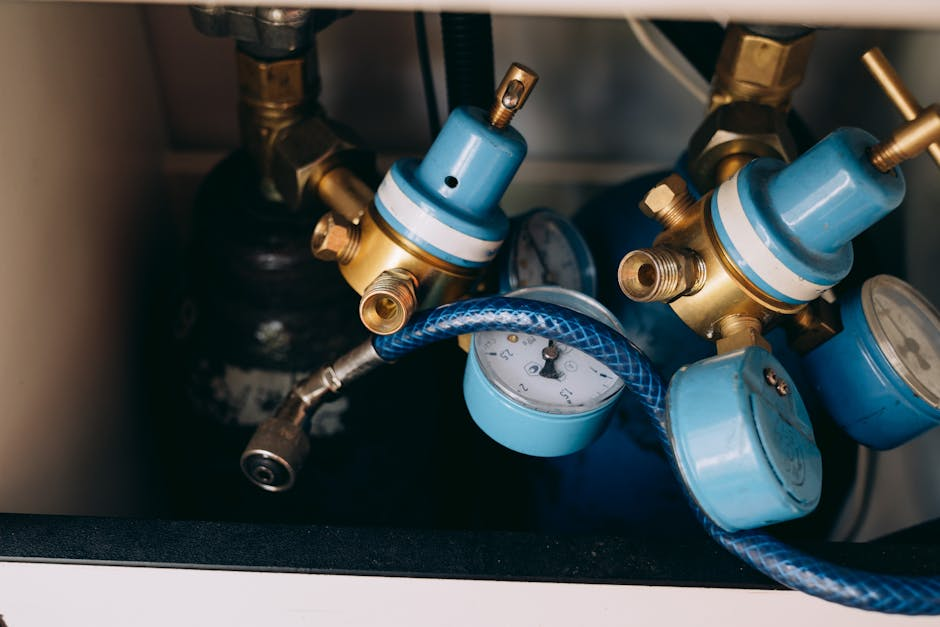
The Pressure Reducing Valve (PRV) Most homes in Utah have a PRV. This bell-shaped brass device sits on your main water line and acts as a "gatekeeper" to protect your pipes from the high pressure of the city mains.
If your PRV is failing, it can "stick," causing a sudden or gradual drop in pressure. To adjust it, loosen the lock nut and turn the bolt on top clockwise.
Do this in small increments (half-turns) and check the pressure at a faucet after each adjustment. If turning the bolt does nothing, the internal spring has likely failed, and the unit needs replacement.
We specialize in Pressure Regulators and can help you determine if yours is the culprit. If you are a business owner, you might also find our Commercial Pressure Regulator Installation Guide helpful for larger-scale systems.
Addressing Hidden Culprits: Leaks, Clogs, and Corroded Pipes
If you live in an older home in Provo or Salt Lake City, the problem might be inside the walls.

Galvanized Steel Pipes Up until the 1960s, galvanized steel was the standard. Over time, these pipes rust from the inside out.
This rust creates a "scaling" effect, where the internal diameter of the pipe gets smaller and smaller until it's like trying to breathe through a coffee stirrer. Replacing these old lines with copper or PEX can restore up to 50% of lost water flow.
Hard Water and Lime Deposits Utah is famous for "hard" water—water packed with calcium and magnesium. These minerals don't just stay in the water; they bake onto the inside of your pipes and fixtures.
This is especially common in the hot water lines. Over time, these lime deposits act just like rust in galvanized pipes, choking off the flow.
To combat this, we often recommend:
Pipe Replacement: If the damage is done, we can perform Main Water Line Repair or replacement.
Prevention: Understanding The Effects of Hard Water on Your Utah Plumbing is the first step toward a solution.
Water Softeners: Installing a system can prevent future buildup. Learn more about our Water Softener Installation services.
Advanced Solutions and Professional Intervention
Sometimes, the city simply doesn't provide enough pressure for your needs—especially if you have a large home with multiple bathrooms or an extensive irrigation system. In these cases, you might need to "boost" the supply.
Water Pressure Booster Pumps
A booster pump is a motorized unit installed on your main water line. It includes a pressure tank and a pump that kicks in whenever you use water, increasing your PSI by 20 to 40 PSI. This is a game-changer for homes at high elevations or at the end of a long municipal line.
Water Heater Maintenance
If your low pressure is strictly on the hot side, your water heater is likely full of sediment. As water sits and heats, minerals settle at the bottom of the tank.
This sediment can eventually block the "out" port of the heater. Flushing your tank once a year can clear this out and restore your hot water pressure.
When DIY fixes aren't enough, it's time for professional Plumbing Repair. If you experience a sudden, total loss of pressure accompanied by the sound of rushing water, don't wait—call for Emergency Plumbing Services immediately, as this usually indicates a major pipe burst.
For more technical background on these complex issues, see How to Solve Water Pressure Problems.
Frequently Asked Questions About Water Pressure
Why is my water pressure low in only one bathroom?
This is almost always a localized issue. Check the shutoff valves under the sink to ensure they are fully open.
If the valves are fine, the fixture's aerator or the showerhead is likely clogged with mineral deposits. In some cases, a flexible supply line might be kinked behind the wall or under the cabinet.
Can a water heater cause low water pressure?
Absolutely, but usually only for your hot water. If your cold water pressure is great but the hot water is a trickle, it's a "hot-side" restriction.
This is often caused by sediment buildup in the tank or a partially closed shutoff valve on the cold water inlet pipe above the heater. Flushing the tank is the first step to fix low water pressure in this scenario.
Is it the city's fault if my pressure is low?
It can be. If you notice a sudden drop and your neighbors are experiencing it too, the city might be repairing a water main or flushing fire hydrants nearby.
Also, if you live in a rapidly growing area of Utah, the increased demand from new construction can sometimes temporarily lower the pressure for everyone on the line.
Conclusion
Living with low water pressure is a choice you don't have to make. From simple vinegar soaks to professional valve adjustments, there is always a way to get that "firehose" feeling back in your shower.
At All Star Service & Repair, we pride ourselves on helping our Northern Utah neighbors navigate these frustrating plumbing puzzles.
Whether you need a quick Plumbing Inspection to find a hidden leak or a new Pressure Regulator to stabilize your home's flow, we bring integrity and transparent pricing to every job.
Don't spend another morning struggling with a weak shower. Give us a call, and let's get your water moving again!


Comments