Regulate Your Life by Learning to Fix Water Pressure Issues

Updated: Oct 2
When Weak Flow Stops Your Day: How to Fix Water Pressure Issues Fast
Learning to fix water pressure issues at home can save you time, money, and a lot of frustration. Whether your shower feels like a light mist or your kitchen faucet barely trickles, low water pressure is one of the most common plumbing complaints homeowners face.
Quick answer — the most common fixes for low water pressure:
Open the main shut-off valve fully — it may have been partially closed
Clean clogged aerators and showerheads by soaking in white vinegar
Check the water meter valve to confirm it is fully open
Test your pressure with a gauge at an outdoor hose bib (target: 40–80 psi)
Adjust or replace the pressure reducing valve (PRV) if pressure is system-wide and low
Check with neighbors — if they have the same issue, it may be a municipal supply problem
Call a plumber if you suspect hidden leaks, corroded pipes, or a failing PRV
Most homes operate best between 40 and 80 psi. Pressure below 40 psi is generally considered too low and worth investigating right away.
Low pressure is rarely just an annoyance. It can signal bigger problems — a hidden leak quietly soaking your walls, corroded pipes slowly narrowing from the inside, or a pressure regulator that has worn out after years of use.
Left unaddressed, these issues can lead to costly water damage and repair bills.
The good news? Many causes are simple to diagnose and fix yourself. Others need a licensed plumber. This guide walks you through both.
I'm Adam Wettach, owner of Allstar Plumbing, with years of hands-on experience helping homeowners fix water pressure issues across a wide range of residential and commercial plumbing systems. I'll walk you through exactly what to check, what to fix yourself, and when to call in a pro.

Diagnosing the Source: City Supply vs. Internal Plumbing
Before you start tearing apart your plumbing, you need to play detective. Is the low pressure a localized headache, a whole-house rebel, or a neighborhood-wide blackout? Pinpointing the source of the drop is the single most important diagnostic step you can take.
The easiest way to start is with a quick neighbor inquiry. If you step outside and find that your neighbors on both sides are also experiencing weak, sputtering water, the issue is almost certainly with your municipal supply.
Water main breaks, routine city maintenance, or elevated local demand can temporarily drain the pressure out of an entire block. In these cases, your best move is to contact your city water department to report the issue or check for active service alerts.
However, if your neighbors have roaring showers while your home is down to a sad trickle, the problem lies within your property line.
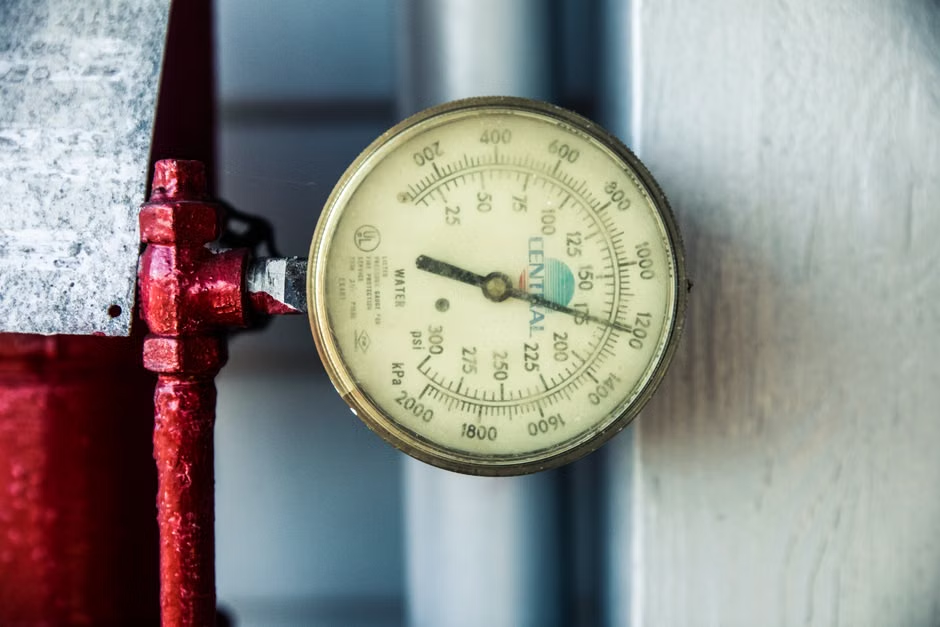
To get an accurate picture of what is happening inside your home, we recommend checking your static pressure. Static pressure is the force of the water when no fixtures are running.
You can easily test this yourself by purchasing an inexpensive water pressure gauge from a local hardware store and screwing it onto an outdoor spigot (hose bib) closest to your main water line entry.
Make sure all indoor faucets, washing machines, and sprinklers are turned off before you open the spigot valve fully. Ideally, your gauge should read between 40 and 80 psi. If the reading is consistently below 40 psi, you have a system-wide low pressure issue.
Why does everyday water pressure vary so much from one street to the next? It often comes down to elevation and gravity. Municipal water systems store water in elevated tanks so gravity can do the heavy lifting of distributing it to surrounding neighborhoods.
If your home sits on a hill or is located far from the city's main storage tanks, you naturally receive less static pressure.
To learn more about how municipal systems manage these shifts and what it means for your home, you can read about Troubleshooting water pressure and flow | Portland.gov.
If you are dealing with persistent pressure drops unique to our local desert climate and infrastructure, our comprehensive Low Water Pressure in House Utah Guide offers excellent localized troubleshooting insights.
Step-by-Step DIY Guide to Fix Water Pressure Issues
If you have confirmed that the issue is isolated to your home, do not panic. Many of the most common causes of low water pressure can be resolved with simple, cost-effective DIY steps before you ever need to pay for a professional service call.
Let's start by looking at the typical costs associated with common plumbing repairs to give you an idea of what you can save by tackling the basics yourself:
Repair Type | Average DIY Cost | Average Professional Cost |
Cleaning/Replacing Aerators | $2 – $10 | $100 – $200 (Service Call) |
Running Toilet Repair | $15 – $40 | $100 – $300 |
Pressure Regulator (PRV) Replacement | $50 – $150 (Parts only) | $250 – $600 |
Standard Leak Repair | $10 – $50 (Basic patch) | $150 – $500 |
Drain Cleaning | $10 – $30 (Hand snake) | $100 – $400 |
To systematically fix water pressure issues, follow these initial steps:
Step 1: Check the Main Shut-Off Valve
Your home has a master shut-off valve, typically located where the main water line enters your home (often in the basement, utility room, or near the water heater).
If you recently had plumbing work done, or if someone was organizing a nearby closet, this valve might have been bumped or only partially reopened.
A valve that is even slightly closed can severely restrict water flow. Ensure the handle is turned completely to the open position.
Step 2: Inspect the Water Meter Valve
There is a second main valve located at your water meter, which is usually housed in an outdoor box near the street.
Much like your indoor shut-off valve, this meter valve must be fully open. If city workers recently read or serviced your meter, they may not have opened it all the way back up.
Step 3: Test Your Water Softener Bypass
If you have a water softener, it could be the hidden bottleneck. Over time, the internal resin bed can become clogged with sediment, or the system may simply be undersized for your household's peak water usage.
To test this, find the bypass valve on the back of your water softener unit and slide or turn it to the "bypass" position. This allows water to flow directly into your home without passing through the softener.
If your water pressure suddenly returns to normal, you know your water softener needs maintenance, repair, or replacement.
Taking these steps early can protect your home from sudden pressure surges and prevent major issues down the road. For more on keeping your home's system safe, check out our guide to Prevent Plumbing Leaks and Water Damage: A Guide for Your Home's Plumbing.
For a complete, highly detailed breakdown of these manual checks, you can reference this excellent Fix Low Water Pressure: Your Step-by-Step DIY Guide to a Stronger Flow - MyPlumbingPal.
How to Fix Water Pressure Issues in Individual Fixtures
If your water pressure is great in the kitchen but absolutely abysmal in the master bathroom, you are dealing with a localized fixture issue. This is actually great news because localized issues are incredibly easy to solve!
The prime suspect in 70% of weak bathroom or kitchen sink faucets is a clogged aerator. The aerator is the small mesh screen screwed onto the very tip of your faucet nozzle.
Its job is to mix air into the water stream to create a smooth flow, but it also acts as a trap for rust flakes, sediment, and mineral scale.
To clean it:
Unscrew the aerator by hand or gently with a pair of pliers (wrap a rag around the metal to avoid scratching the finish).
Take the aerator apart and flush the individual pieces under running water. Use a toothpick or an old toothbrush to clear out stubborn debris.
If you live in a hard water area, soak the aerator parts in a small cup of white vinegar for at least three hours to dissolve the limescale.
Reassemble and screw it back on.

Showerheads suffer from the exact same problem. Over time, hard water minerals clog the tiny rubber nozzles, causing the spray to shoot in random directions or slow to a drizzle. You can perform a showerhead descaling without even removing the fixture!
Simply fill a plastic bag with white vinegar, slip it over the showerhead until the nozzles are completely submerged, and secure it in place with a rubber band. Let it soak overnight.
In the morning, remove the bag, wipe away the loosened scale, and run hot water to flush out the remaining buildup.
If cleaning the aerator or showerhead doesn't work, the restriction might be deeper inside the faucet cartridge. Mineral deposits can build up inside the cartridge chambers, or a rubber seal may have degraded and slipped out of place.
Replacing a faucet cartridge is a straightforward DIY project that involves shutting off the local supply valves under the sink, removing the faucet handle, pulling out the old cartridge, and sliding in a matching replacement from your local hardware store.
That federal water-saving regulations require modern showerheads to deliver less than 2.5 gallons per minute (GPM). Many fixtures contain small plastic flow restrictors inside the neck to enforce this limit.
While removing these restrictors can dramatically increase your flow, sediment often clogs these tiny plastic discs, dropping your pressure far below the legal standard. Cleaning this restrictor during your regular maintenance will keep your shower performing beautifully.
For more fixture-specific troubleshooting hacks, check out How to Increase Water Pressure in Your House: 12 Fixes.
Identifying Hidden Leaks and Pipe Corrosion
When low water pressure is system-wide but your main valves are wide open, you may be dealing with a more serious plumbing threat: a hidden leak or severely corroded pipes.
If you live in an older home built before the 1990s, check the material of your pipes. Galvanized steel pipes were once the industry standard, but they have a fatal flaw — they rust from the inside out.
Over roughly 20 to 30 years, this internal corrosion builds up, narrowing the pathway for water to travel. It’s the plumbing equivalent of clogged arteries; even if your city supply is perfect, the water simply cannot push through the rusted, narrowed pipes.
In contrast, copper pipes typically last over 50 years, and modern PEX or brass pipes can last 40 to 70 years without internal corrosion issues.
To rule out a major, hidden leak that is actively stealing your water pressure, you can perform a simple water meter test:
Turn off every single water-using appliance and faucet inside and outside your home (including ice makers and toilets).
Go locate your outdoor water meter box and write down the exact reading. Note if the small low-flow indicator dial (often a small red or blue triangle or star) is spinning.
Wait 15 to 30 minutes without using a single drop of water.
Check the meter again. If the numbers have changed or the low-flow dial is spinning, you have an active leak somewhere in your system.
A classic culprit of hidden water loss is a running toilet. A leaking flapper or misadjusted fill valve can waste hundreds of gallons of water every single day.
While a running toilet might not completely tank your shower pressure on its own, multiple minor leaks combined with corroded lines will quickly degrade your overall system performance.
To prevent these issues from sneaking up on you, take a look at our guide on Regular Plumbing Maintenance Utah Homeowners Can't Ignore.
For a deeper dive into how aging pipes and hidden leaks can quietly drain your home's system, read 12 Reasons for Low Water Pressure in Your House - The Spruce.
Troubleshooting and Adjusting Your Water Pressure Regulator
If your home's water pressure suddenly drops across every single fixture, or if it fluctuates wildly throughout the day, the prime suspect is almost certainly your Pressure Reducing Valve (PRV).
A water pressure regulator, or PRV, is a brass plumbing fixture typically installed on your main water line right after the main shut-off valve.
Its job is to take the high, erratic pressure delivered by the city mains (which can exceed 150 psi) and safely step it down to a stable, manageable level for your home's pipes and appliances.
Like any mechanical device with moving internal parts, springs, and rubber diaphragms, a PRV has a limited lifespan. On average, a quality pressure regulator will last between 6 and 12 years.
When a PRV fails, it can fail in the open position — exposing your home to dangerously high pressure — or it can fail in a semi-closed position, severely choking your water supply and causing a massive, whole-house drop in pressure.
If you suspect your PRV is just set too low, you can attempt a manual adjustment:
Locate the PRV on your main line. You will see a bell-shaped brass valve with a bolt and a lock nut protruding from the top.
Loosen the lock nut with a wrench.
To increase pressure, turn the adjustment screw clockwise (righty-tighty) in very small increments — no more than a quarter-turn at a time. Turning it counter-clockwise will decrease the pressure.
Have someone watch your pressure gauge attached to the nearby hose bib. Never adjust your home's pressure above 80 psi, as this can cause pinhole leaks in copper pipes, wear down appliance seals, and lead to sudden pipe bursts.
Once you reach your target pressure (ideally around 60 psi), tighten the lock nut back down to secure the adjustment screw.
If turning the adjustment screw has absolutely no effect on your home's water pressure, or if you hear a loud banging sound in your pipes (known as water hammer) when you turn off a faucet, your regulator's internal diaphragm has likely ruptured, and the unit must be replaced.
If you need a reliable, professional-grade replacement valve, we recommend the 3/4 Pressure Regulator N45BDU PEX PRV, which is engineered for exceptional durability and consistent flow control.
You can also read more about how regulators fail and how to spot the early warning signs in this article on Low Water Pressure: Common Causes, Fixes, and Potential Concerns.
When to Call a Professional to Fix Water Pressure Issues
While cleaning an aerator or turning a valve handle are perfect Saturday afternoon DIY projects, some water pressure issues require the training, specialized tools, and licensing of a professional plumber.
You should put down the wrench and call us if you experience any of the following:
A Main Line Leak
If your water meter test indicates a leak, but you cannot find any damp spots or running toilets indoors, you may have a cracked main water line buried deep beneath your lawn or driveway.
Repairing underground lines requires specialized leak detection equipment and excavation tools.
Whole-House Repiping
If your home's low pressure is caused by corroded, rusted-out galvanized steel pipes, the only permanent solution is to replace them.
Upgrading your home's plumbing to modern, durable copper or PEX lines is a major project that requires professional planning, permits, and precise installation to ensure your system meets local building codes.
Installing a Pressure Booster Pump
If your city's municipal supply pressure is consistently below 40 psi due to your home's high elevation or location on a multi-story hill, no amount of pipe cleaning or valve adjusting will fix the issue. In these cases, we can install a water pressure booster pump.
These systems combine an electric pump with a pressurized bladder tank to actively pull water from the city line, store it, and push it through your home at a beautiful, consistent 60 psi.
Water Softener Malfunctions
If your water softener is restricting your flow, it may have a clogged resin tank or internal valve failure.
Our team can quickly diagnose whether the unit can be repaired or if it is time to schedule a professional Water Softener Repair and Replacement to restore both your water quality and your flow.
Frequently Asked Questions About Water Pressure
Why did my water pressure suddenly drop throughout the entire house?
A sudden, whole-house drop in water pressure is almost always caused by one of three things: a major municipal water main break in your neighborhood, a main shut-off valve that was accidentally bumped or partially closed, or a sudden, catastrophic failure of your water pressure regulator (PRV).
Check with your neighbors first to see if the issue is widespread, and then inspect your main indoor shut-off valves.
How does hard water affect my home's water pressure?
Hard water contains high concentrations of dissolved calcium and magnesium. When this water is heated or sits in your pipes, it leaves behind rock-hard mineral deposits known as limescale.
Over time, this scale builds up inside your pipes, faucet cartridges, and showerheads, narrowing the path for water and dramatically reducing your overall flow.
To protect your home, you can read about The Effects of Hard Water on Your Utah Plumbing.
What is the ideal water pressure range for a residential home?
The normal, safe operating range for residential plumbing is between 40 and 80 psi.
Most plumbers agree that 60 psi is the absolute sweet spot — it provides a strong, satisfying shower spray and fast-filling tubs without putting unnecessary stress on your pipe joints, hose connections, and home appliances.
Anything below 40 psi is considered too low, while anything above 80 psi can cause severe plumbing damage and voids many appliance warranties.
Conclusion
At Allstar Service & Repair, we believe that you shouldn't have to plan your day around a weak shower or a sputtering kitchen faucet. Understanding how to fix water pressure issues is the first step toward reclaiming comfort and efficiency in your daily routine.
Whether your home needs a simple valve adjustment, a thorough fixture cleaning, or a brand-new water pressure regulator, our team is here to help.
We proudly serve homeowners throughout Provo, UT, and Northern Utah counties with the honest service, upfront pricing, and technical expertise you deserve.


Comments