Brine Tank Full of Water How to Fix: A Simple Guide

Updated: Oct 7
When Your Brine Tank Is Full of Water, Here's What to Do

If you're dealing with a brine tank full of water how to fix it comes down to identifying which part of the regeneration process has failed. Here's a quick overview:
Quick Fix Summary:
Check for a salt bridge - tap the salt surface with a broom handle; if it's hollow underneath, break it up
Inspect the float valve - if stuck in the raised position, it keeps filling the tank without stopping
Clean the injector/venturi - a clogged injector can't create suction to draw brine out
Check the drain line - kinks or clogs prevent brine from draining after regeneration
Run a manual regeneration - observe whether the water level drops during the brine draw cycle
If none of those fix it, you may have a worn control valve or piston seal that needs professional attention.
A brine tank that looks like a small swimming pool is one of the most common water softener complaints.
Some standing water in the tank is completely normal — but when the water level rises above the salt, stays full after regeneration, or the tank never seems to empty, something in the system has broken down.
The good news? Most causes are mechanical and fixable without replacing the entire system. The key is knowing where to look.
I'm Adam Wettach, owner of All Star Service & Repair, and I've diagnosed and repaired hundreds of waterlogged brine tanks across Utah homes and businesses — including the exact brine tank full of water how to fix scenarios we'll walk through in this guide.
Let's get your softener back on track.
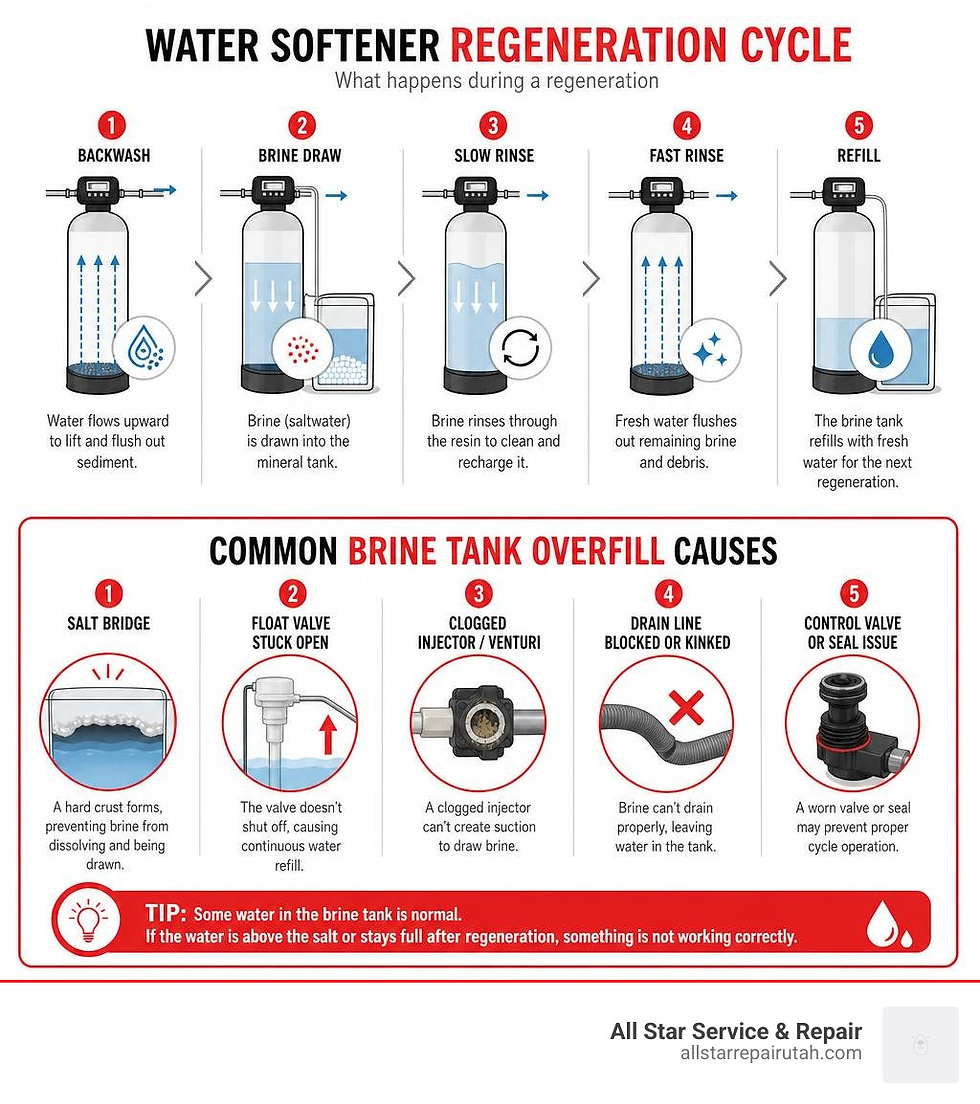
Brine Tank Full of Water How to Fix and Diagnose the Issue
To figure out why your brine tank is waterlogged, it helps to understand how the system works. Your water softener relies on a process called ion exchange. Inside the main mineral tank, thousands of tiny resin beads hold onto sodium ions.
As hard water flows through the tank, the beads act like magnets, grabbing calcium and magnesium (the hard minerals) and swapping them for sodium.
Eventually, those resin beads get coated in hard minerals and lose their charge. That is where the brine tank comes in.
During the regeneration cycle, the system draws a concentrated salt solution (brine) from the brine tank into the mineral tank to wash away the hard minerals and recharge the resin beads.
If your brine tank is overflowing or staying full, the system is failing to draw that brine out, or it is continuously adding too much water. When this happens, your water softener cannot regenerate properly, which leads to hard water symptoms returning to your home.
If you want to dive deeper into the mechanics of why this happens, you can check out this comprehensive Waterlogged Brine Tank Guide.
Normal Water Levels vs. a Waterlogged Brine Tank
One of the most common questions we get in Northern Utah is, "Should there be any water in my brine tank?"
The answer is yes, but the amount depends on whether you have a "wet" or "dry" brine tank system:
Dry Brine Tanks (Modern Systems)
These systems only fill the brine tank with water about one to two hours before a scheduled regeneration cycle. During normal operation between cycles, there should be little to no water visible at the bottom of the tank — typically just a few inches.
Wet Brine Tanks (Older Systems)
These systems keep water in the brine tank constantly so that brine is always ready. Even in these models, however, the water level should only be about 6 to 12 inches deep at the bottom of the tank, and it should always sit well below your salt level.
If you look into your salt tank and see water sitting several inches above your salt, or if the water level is nearly reaching the top of the tank, your system is waterlogged.
Feature / Metric | Normal Brine Tank Level | Waterlogged Brine Tank |
Water Visibility | Below the salt level (usually 6-12 inches deep) | Above the salt level, often near the top of the tank |
Water Level Location | Measured inside the narrow brine well tube | Filling the entire main salt compartment |
Post-Regeneration | Water is drawn down to a few inches | Water remains high and stagnant |
Salt Condition | Dry or slightly damp pellets on top | Completely submerged, mushy, or crusty |
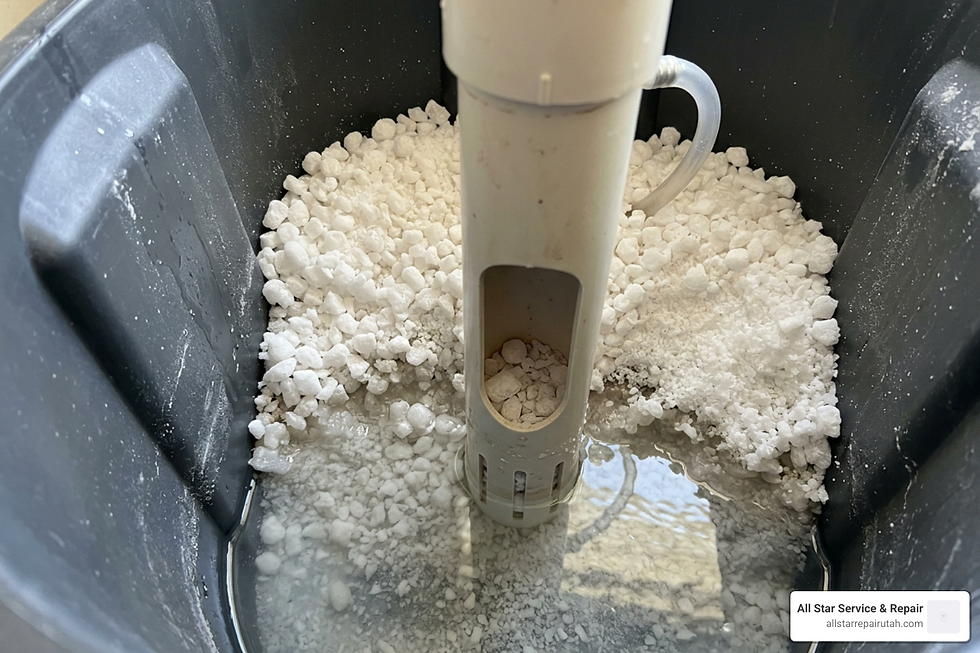
To accurately check your water level, don't just look at the salt. Pop the cap off the narrow, vertical tube inside your salt tank (known as the brine well). This tube houses the float assembly and shows the true water depth without the salt blocking your view.
Common Causes of a Waterlogged Brine Tank
When a water softener fails to empty its brine tank, it is usually due to a breakdown in suction or a physical blockage. Understanding these common culprits can help prevent the long-term damage that hard water scale can cause to your plumbing.
You can read more about these risks in our article on The Effects of Hard Water on Your Utah Plumbing.
Here are the primary causes behind a waterlogged brine tank:
Salt Bridge or Salt Mushing Blockages
A salt bridge is a hard, crusty layer of salt that forms a hollow dome inside the tank. It looks like you have plenty of salt, but underneath the crust is an empty space filled with water.
Salt mushing occurs when salt pellets break down into fine, crystallized particles that settle at the bottom of the tank. This creates a thick, cement-like sludge that blocks the water intake screen, preventing the system from drawing brine.
Clogged Injector, Venturi, or Brine Line
The injector and venturi valve work together to create a vacuum that pulls the brine solution out of the salt tank and into the resin tank. If the tiny holes in the injector nozzle become clogged with sediment, iron, or salt crystals, the system loses suction.
Additionally, if the brine line (the small plastic tube connecting the control valve to the brine tank) is kinked, cracked, or clogged, water cannot flow.
For a deeper look at diagnosing these mechanical flow failures, refer to this guide on Water Softener Brine Tank Troubleshooting.
Malfunctioning Float Valve or Safety Shutoff
The safety float valve sits inside the brine well. Its job is to act as an emergency shutoff to prevent the tank from overflowing if the timer or control valve malfunctions.
If the float gets stuck on salt crust, dirt, or even a spider web, it can either prevent water from being drawn out or cause the tank to fill continuously.
Step-by-Step DIY Solutions for Your Water Softener
Before you start working on your water softener, it is essential to take proper safety precautions.
Tools and Materials Needed:
A clean broom handle or wooden dowel (never use sharp metal tools)
A bucket and a plastic cup or scoop
A wet-dry vacuum (optional, but highly recommended)
A small bucket of warm water
A small non-metal tool (like a toothpick or plastic needle)
Clean rag or towel
Safety First:
Bypass the System: Locate your water softener's bypass valve and push it into the "bypass" position. This isolates the softener from your home's water supply, ensuring no water pressure enters the unit while you work. If you are unsure how to operate your valve, check out our guide on the Bypass Valve Water Softener.
Unplug the Unit: Disconnect the water softener from its electrical outlet to prevent any electrical hazards or accidental regeneration cycles while your hands are in the tank.

Step-by-Step: Brine Tank Full of Water How to Fix It
If your tank is completely waterlogged, follow this systematic process to drain the excess water and begin diagnosing the root cause:
Scoop or Vacuum the Excess Water
Use a small plastic cup to scoop the standing water out of the brine tank and into a bucket. If you have a wet-dry vacuum, you can use it to quickly suck the water out of the brine well tube.
Examine the Bottom of the Tank
Once the water is lowered, check for built-up salt sludge or mush at the bottom.
Initiate a Manual Regeneration
After you have cleared the excess water and checked for basic blockages, plug the unit back in, take it out of bypass, and start a manual regeneration cycle. Watch the brine tank during the "brine draw" stage to see if the water level starts dropping.
If it does not, the issue is likely a suction or valve failure. For more help on general repairs, read our Water Softener Repair Guide 2026.
Troubleshooting a Brine Tank Full of Water How to Fix It
If the water level fails to drop during manual regeneration, check these physical and mechanical connections:
Check Your Home's Water Pressure
Water softeners require a minimum of 20 to 30 psi of water pressure to create the suction needed to draw brine. If your home's pressure is too low, the system won't empty.
Inspect the Drain Tubing
Look at the plastic drain line exiting the control head. Ensure it is not kinked, frozen, or pinched. A drain line should never run longer than 30 feet or rise more than 8 feet above the floor, as this creates back-pressure that halts the regeneration cycle.
Verify the Air Check Valve
Located at the bottom of the float assembly, the air check valve prevents air from being sucked into the system. If it is stuck closed, no brine can be drawn.
If you suspect a larger mechanical issue within the valve head itself, you may need to Repair Water Softener Valve components.
How to Safely Break a Salt Bridge and Clear Salt Mush
If you discover a hard crust or a thick layer of sludge at the bottom of your tank, here is how to resolve it safely:
Break the Salt Bridge
Take a clean broom handle or wooden dowel and gently tap the top layer of salt. If you feel a hard crust that suddenly gives way to empty space below, you have found a salt bridge.
Carefully break the crust into smaller pieces. Avoid hitting the sides of the brine tank, as you could crack the plastic.
Remove Salt Mushing Sludge
If the salt has turned into a thick paste at the bottom, scoop out all the loose salt on top and set it aside. Use a cup or a wet-dry vacuum to remove the wet, mushy salt from the bottom of the tank.
Rinse and Refill
Pour a gallon of warm water over the remaining salt residue to dissolve any lingering chunks. Once the tank is clean, add fresh, high-purity salt pellets, keeping the tank no more than half full to prevent future bridging.
Cleaning the Injector, Venturi, and Brine Line
A clogged injector is the single most common reason a brine tank stays full. Here is how to clean it:
Locate the Injector Assembly
This is usually found on the side of the main control valve head under a small cap held in place by screws.
Remove the Injector and Screen
Unscrew the cap and carefully pull out the plastic injector nozzle, throat, and tiny screen.
Clean the Components
Soak the parts in warm, soapy water or a mild scale remover. Use a toothpick or a plastic needle to gently clear any debris from the tiny holes.
Never use metal needles or drill bits, as they can easily enlarge the opening and permanently ruin the injector's suction capabilities.
Flush the Brine Line
Disconnect the small plastic brine line from both ends. Blow through it or flush it with warm water to ensure there are no salt crystal blockages or air locks inside. Reassemble all parts securely.
Troubleshooting the Float Valve and Safety Assembly
If the float valve is stuck, your tank will not stop filling. Follow these steps to restore smooth movement:
Remove the Float Assembly
Pull the cap off the brine well and carefully lift the entire float rod assembly out of the tube.
Clean the Float and Stem
Rinse the assembly under hot tap water to dissolve any salt crust or buildup. Ensure the plastic float slides up and down the stem freely without sticking.
Inspect the Seals
Check the small rubber seals at the bottom of the assembly for wear or tearing. If the float is cracked or the rod is bent, replace the entire safety float assembly.
Preventing Future Water Softener Brine Tank Overfills
Regular preventative care is the easiest way to avoid a waterlogged brine tank. By incorporating a few simple habits, you can keep your system running smoothly for its entire 10-to-15-year lifespan:
Use High-Purity Salt
Always opt for high-quality, 99.5% pure solar salt or evaporated salt pellets. Avoid using cheap rock salt, which contains high levels of dirt and insoluble minerals that quickly form mushing sludge at the bottom of your tank.
Keep the Salt Level Balanced
Do not overfill your brine tank. Keep the salt level filled between one-third and two-thirds full. Filling the tank to the very top increases the risk of salt bridging, especially in humid basements.
Perform Monthly Visual Checks
Once a month, take a quick peek inside your salt tank. Make sure the salt isn't clumping, verify that the water level is below the salt, and ensure the brine well is clean.
Schedule Annual Maintenance
Just like your car, a water softener needs periodic tune-ups. A professional technician can deep-clean your brine tank, sanitize the system, and inspect the internal piston seals for wear. You can schedule this easily through our Water Softener Maintenance Services.
Frequently Asked Questions About Water Softener Water Levels
How much water should normally be in a brine tank after regeneration?
In a standard modern "dry" brine tank, there should only be about 2 to 4 inches of water at the very bottom of the tank after a regeneration cycle completes.
If you have an older "wet" system, the water depth inside the brine well will typically sit between 6 and 12 inches, but it should always remain well below your dry salt level.
Can low salt quality cause standing water in the brine tank?
Yes. Low-purity salt (such as rock salt) contains impurities and clay-like binders that do not dissolve in water.
Over time, these fine particles settle at the bottom of your tank, forming a thick sludge that blocks the brine well screen. This prevents the system from drawing water, leading to a flooded brine tank.
When should you call a professional instead of trying to fix it yourself?
While cleaning an injector or breaking a salt bridge are great DIY projects, you should call a professional if:
You have cleaned all components, but the tank continues to overflow.
Your control head is displaying electronic error codes that will not clear.
You suspect a failed resin bed (indicated by yellow or brown water, or resin beads escaping into your home's faucets).
There are active water leaks coming from the bypass valve or the main control head.
If your system is nearing the end of its lifespan and repairs are no longer cost-effective, we can assist you with a seamless Water Softener Replacement.
Conclusion
A brine tank full of water is a frustrating problem, but with a little troubleshooting, it is usually easy to resolve.
By checking for salt bridges, keeping your injector clean, and ensuring your float valve moves freely, you can protect your home's plumbing and enjoy the benefits of soft water once again.
At All Star Service & Repair, we pride ourselves on delivering home services with integrity, transparency, straightforward pricing, and superior workmanship.
Whether you need a quick repair, a routine tune-up, or a brand-new installation in Provo or Northern Utah counties, our expert team is here to help.


Comments